What “give way” actually means
From the Official NZ Road Code: giving way means the road user you’re giving way to - driver, cyclist, pedestrian, or any other road user - doesn’t need to stop, brake or slow down, swerve, or take any other evasive action to avoid you.
If the other person has to adjust for you, you didn’t give way properly.
Stop sign vs Give Way sign
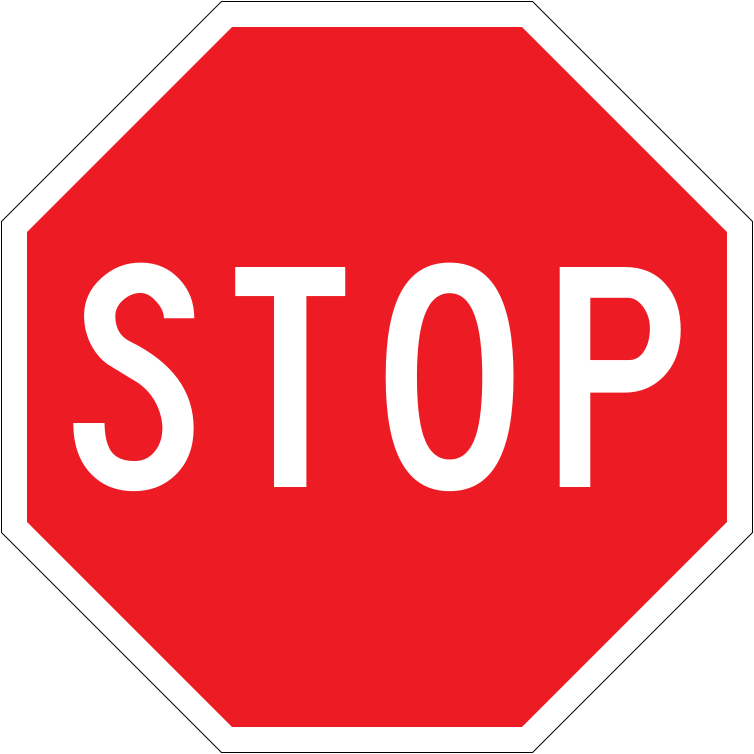
At a Stop sign
- Come to a complete stop - don’t just slow down
- Stop where you can see vehicles coming from all directions
- Stay stopped until you’ve given way to all other vehicles (including cycles and motorcycles)
- If you and another vehicle are both facing Stop signs, use the give way rules
- Don’t go until it’s safe
The word STOP and a single yellow line are painted on the road.
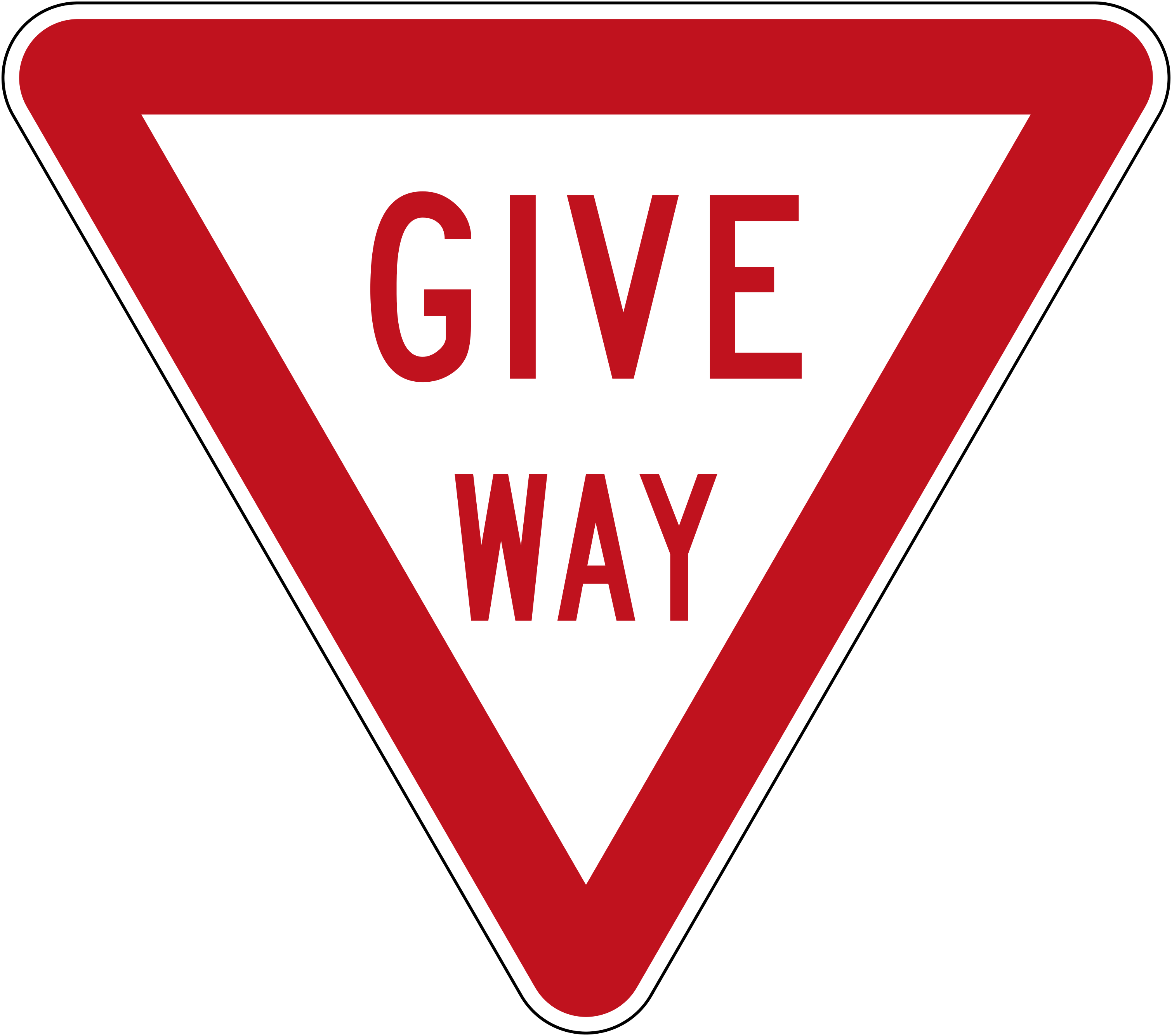
At a Give Way sign
- Slow down and be ready to stop
- Give way to all other vehicles, except those facing a Stop sign
- If you and another vehicle are both facing Give Way signs, use the give way rules
- Don’t go until it’s safe
A triangle give way marking and a white line are painted on a sealed road.
Common fail: Thinking Give Way always means a full stop. It doesn’t. Also: a car at Stop must give way to a car at Give Way.
The core give way rules
- If you’re turning, give way to all traffic that’s not turning. That includes cyclists in cycle/bus lanes and vehicles using bus lanes.
- If you’re turning right, give way to all vehicles coming towards you that are turning left (and those going straight). This also applies when both vehicles face the same control (same Stop signs, same Give Way signs, or both have green lights).
- If you’re leaving the path of a marked centre line at an uncontrolled intersection, you must give way to vehicles following the centre line - you’re legally treated as turning.
- At a T-intersection or driveway: traffic on the terminating road / driveway (bottom of the T) gives way to all traffic on the continuing road (top of the T). Memory aid: Top of the T goes before me.
- Coming out of a driveway: give way to anyone using a footpath, cycle path, shared path, or the road.
- In all other situations, give way to traffic from your right (for example at a roundabout, or at signals when all approaches have flashing yellow).
Theory trap (C31 style): “If you are turning left, you must give way to vehicles coming towards you that are turning right” - False. It’s the right-turner who gives way to the left-turner.
New from 1 October 2026: On roads 60 km/h or less, other drivers must give way to a bus signalling to leave a bus stop - separate from who may use a bus lane. Full explainer: give way to buses NZ.
Both turning right towards each other
When two vehicles come towards each other and both turn right, they normally don’t cross paths - so neither has to give way to the other for that turn. Still watch for traffic going straight through (your view can be blocked), and give large trucks/buses extra room.
Traffic signals (quick refresh)
- Red - stop
- Green - go if safe; if turning right, give way to traffic coming towards you going straight or turning left; give way to pedestrians crossing
- Yellow - stop unless you’re so close you can’t stop safely
- Flashing yellow - signals aren’t working; apply the give way rules
Arrow signals apply only to the direction the arrow points. A police officer’s directions overrule traffic signals, road signs, and give way rules.
How to practise this for theory
- Memorise the six core rules above as a checklist
- Drill diagram questions (I-series style): “Who must you give way to?”
- Pair this with road signs meanings so Stop/Give Way markings stick
- Then tackle roundabouts - they’re a special case of “give way to the right”
- Learn the new give way to buses rule (from 1 October 2026 on roads 60 km/h or less)
FAQ
If I’m turning left, do I give way to right-turners coming towards me?
No. Right-turners give way to left-turners (and to traffic going straight).
What does giving way mean?
The other road user shouldn’t need to stop, slow, swerve, or take evasive action to avoid you.
Who gives way at a T-intersection?
Bottom of the T gives way to the top of the T - “Top of the T goes before me.”